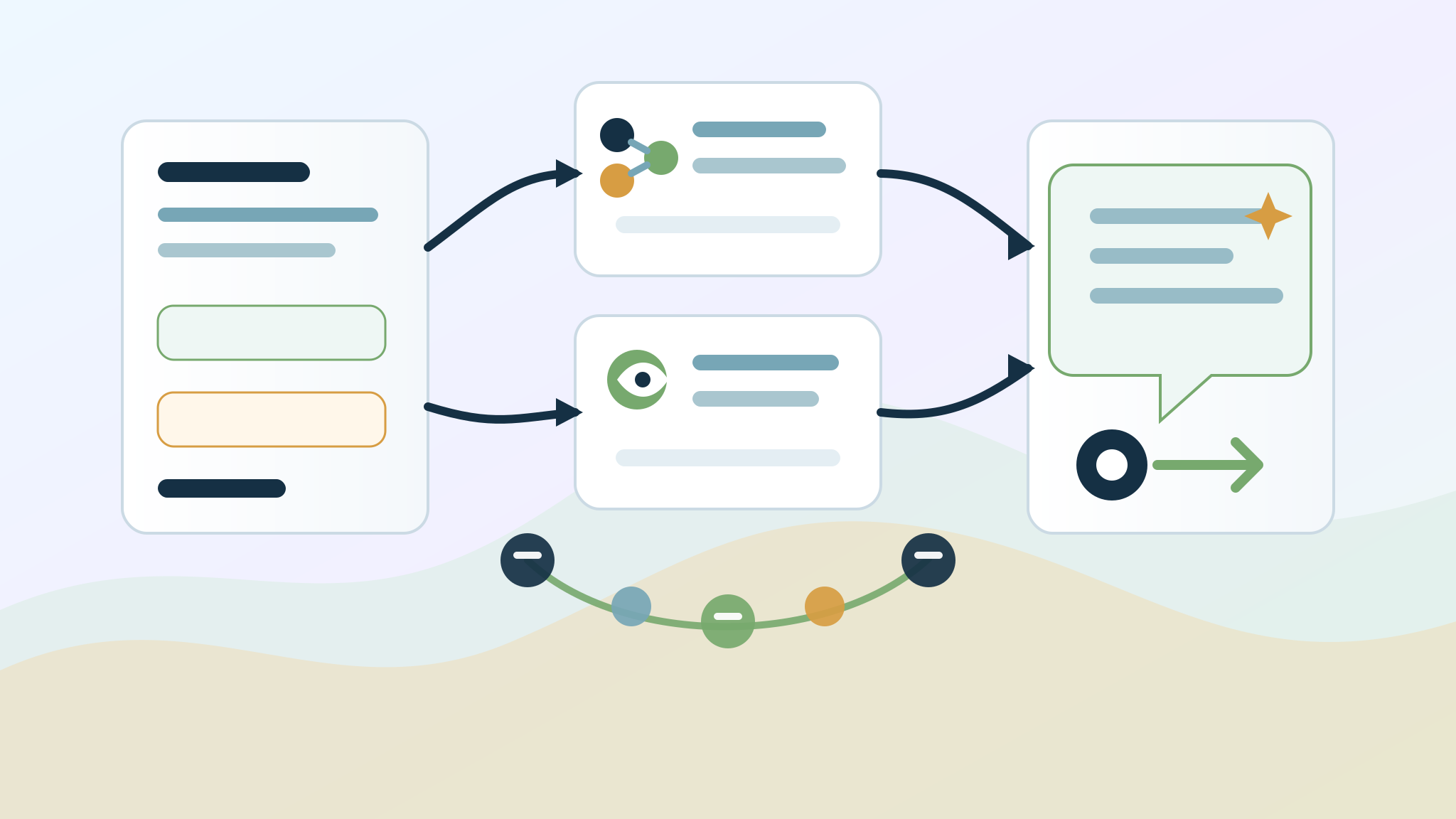
Many small business blogs lack a defined job beyond publishing. A useful content engine starts with a buyer question, supports the answer with evidence, adds a visual only when it helps, links to the relevant service route, and gives the reader one clear next step.
Halo uses this pattern for owner-led businesses that need a repeatable publishing route without building a large editorial operation. The first useful release is not volume. It is one checked article with a clear purpose, a live discovery route, a relevant next action, and a baseline for later measurement.
What is an AI website content engine?
An AI website content engine is a repeatable publishing system that turns approved business knowledge into a live, maintainable route on the website. It can include:
- A researched topic tied to a real buyer problem.
- A written article with a clear answer near the top.
- A relevant image, diagram, product photo, or workflow visual when it materially improves understanding.
- Article, FAQ, and breadcrumb schema where the page supports it.
- Internal links to the service, audit, product, or booking path.
- A feed and sitemap that help eligible crawlers discover the URL, plus a preview image for supported sharing surfaces. A sitemap does not guarantee crawling or indexing.
The AI part should help draft, structure, summarise, repurpose, and check the page. It should not invent claims, testimonials, pricing, or capabilities the business cannot prove.
Why small businesses should start with one post
Publishing volume does not compensate for weak evidence or a missing buyer route. One useful article is a safer first release because its claims, links, indexability, engagement, and next action can be checked before the workflow expands.
For a local service business, that might be a practical guide to choosing a supplier. For an ecommerce brand, it might be a ritual, comparison, or ingredient guide. For a consultant, it might be a decision framework that helps the buyer choose the right first project.
The post should do three jobs:
- Help the right buyer recognise their problem.
- Make the business feel competent before the call.
- Offer a relevant next action without claiming the article will create an enquiry.
The content engine checklist
Use this before publishing a blog post:
- Does the headline match a real search, AI-search, or buyer-research question?
- Is there an answer summary in the first screen?
- Is a visual genuinely useful here, and if so is it relevant, accessible, and appropriately sized?
- Does the page link to the next commercial step?
- Does the sitemap include the route?
- Does the feed or blog index include the post?
- Is the claim safe, specific, and backed by what the business can actually deliver?
If the answer to any of those is no, the post is still a draft.
Where AI Helps Without Making The Page Worse
AI can assist with research organisation, outlines, plain-language drafts, internal-link checks, metadata, and reusable snippets. The business must still supply original knowledge, verify every factual claim, and ensure the finished page adds useful value. Google's guidance on generative AI content applies the same quality and spam standards regardless of how the content was produced.
When the same research also needs to become a repeatable issue, archive, and delivery route, treat that as a wider newsletter and publishing system rather than assuming a blog generator solves subscriber permission, send QA, or delivery operations.
Keep the source of truth inside the business: services, examples, pricing boundaries, delivery process, images, and proof notes. Scaled AI-assisted publishing without original value is not a defensible content strategy; Google's people-first guidance prioritises useful, reliable material created for an audience.
Use human source material, AI-assisted structure, responsible review, and automated validation—in that order.
How to measure the first content slice
Do not start with vague brand awareness. Choose one proof signal:
- More qualified clicks from the post into the service route.
- More form starts from visitors who read the article.
- Better search impressions for a buyer question.
- A clearer answer box in AI or search snippets.
- Fewer repeated sales questions because the post answers them first.
Compare the chosen signal over an agreed observation period and record other changes that could affect it. If the evidence supports repeating the pattern, expand carefully. If it does not, fix the route or revise the hypothesis before scaling the calendar.
What should a small business publish first?
Start with a buyer question close to a real decision. Useful candidates include:
- “How much does this service cost?”
- “Which option is right for my situation?”
- “What happens during the process?”
- “What should I ask before buying?”
- “How do I avoid the common mistake?”
Those questions sit near a decision and give the business a clearer route to test than a generic trend post. Whether they produce useful engagement or enquiries still needs measurement.
FAQ
Can AI write the whole post?
AI can produce a first draft, but the business should supply the facts, proof, boundaries, and offer. A responsible person should check the final article, its sources, its rights, and every public claim before publication.
Does every post need an image?
No. Use an image, diagram, product photo, or workflow visual when it explains something better than the text or supports a useful preview. A decorative, generic, inaccurate, inaccessible, or oversized image can make the page worse.
How often should a small business publish?
There is no universal cadence. Publish only as often as the business can supply accurate source material, complete review, maintain the route, and assess the chosen signal. A slower useful cadence is better than an unsupported publishing target.