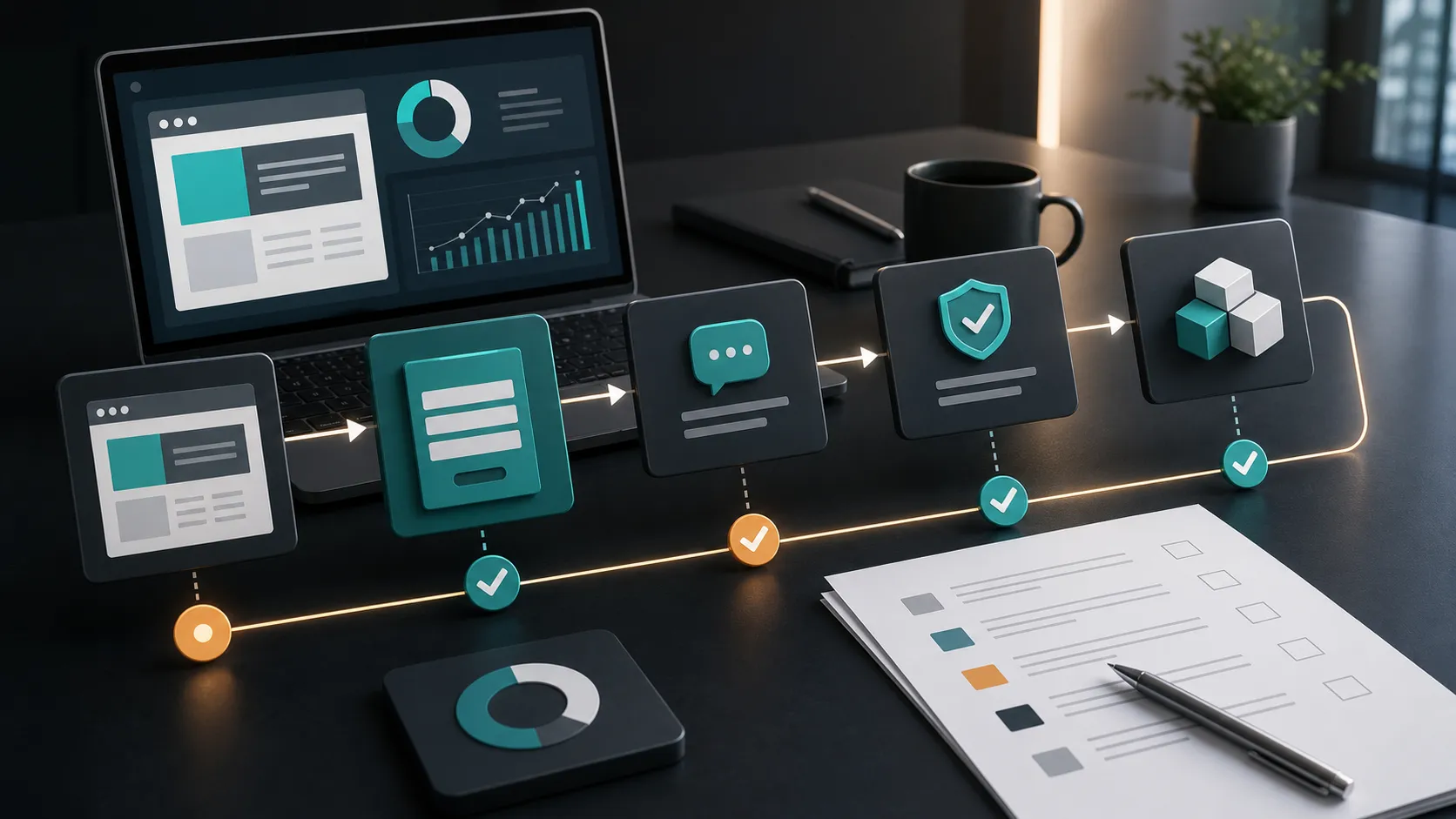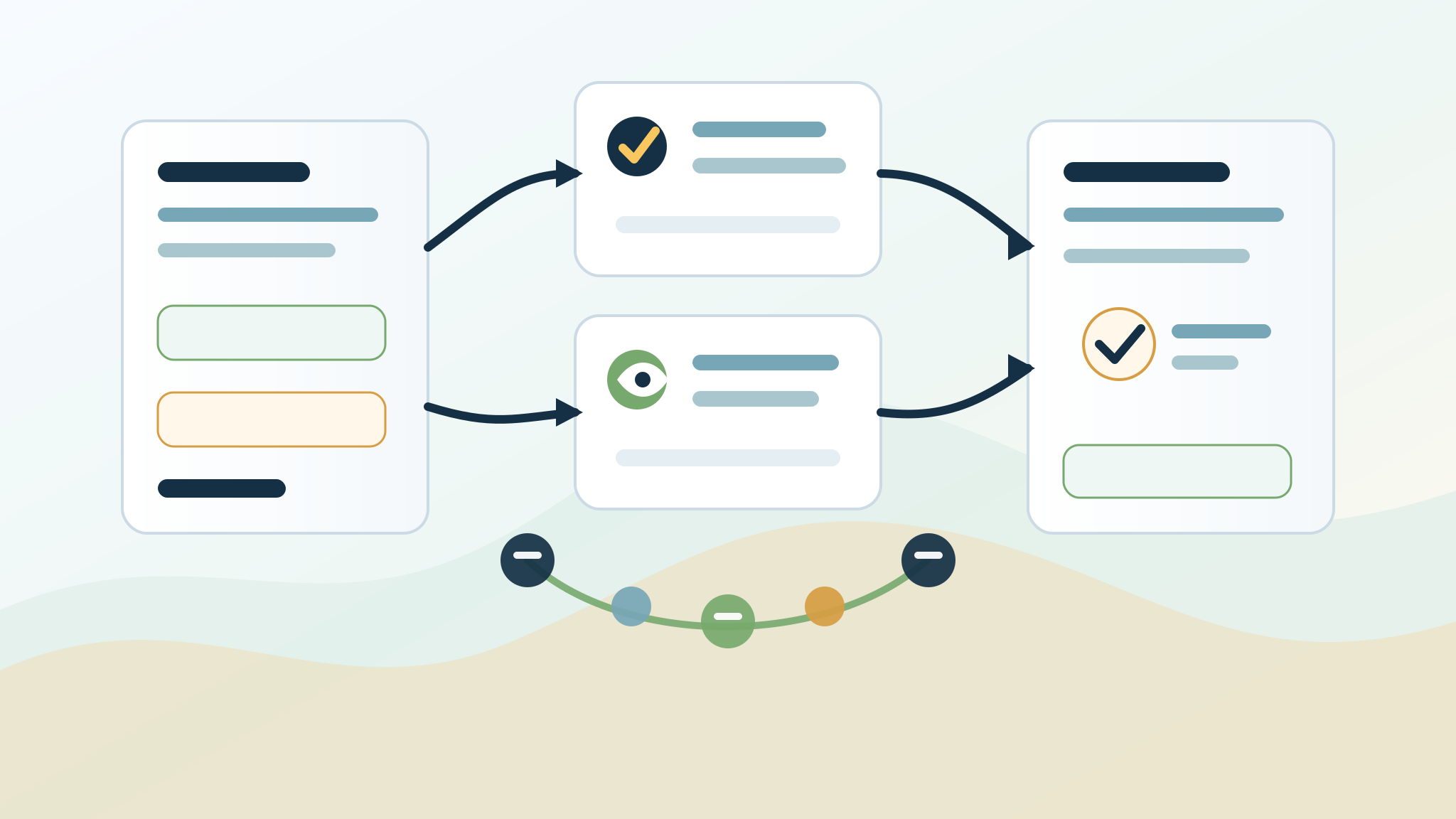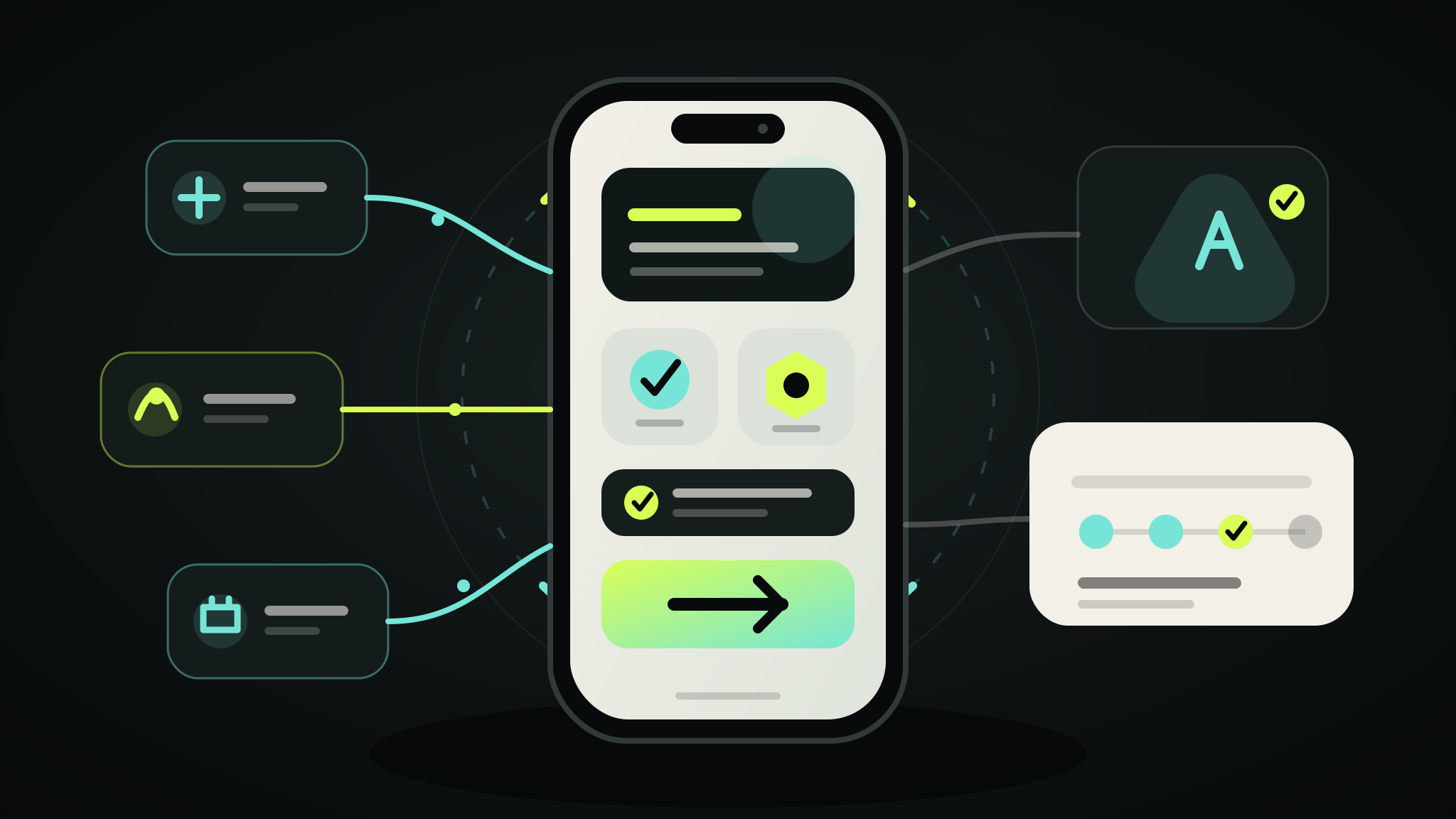
An iOS app development quote should describe a release, its risks and acceptance—not multiply guessed screens by a day rate. Similar interfaces can require very different work when one stores data on-device and another needs accounts, sync, purchases and server operations.
This guide does not publish an invented UK price band. It explains the decisions that make a native-app scope credible enough to estimate.
Quick Answer
To scope iOS app development cost in the UK, define one repeated user job, its state, supported devices and system versions, data boundary, account or purchase route, accessibility, integrations, tests and App Store submission. Separate the first useful release from later options.
Ask for assumptions, exclusions and acceptance checks beside the estimate. Apple controls review and approval, so a developer can prepare and submit a compliant build but cannot guarantee approval or a review date.
Start With One Job A Person Will Repeat
A first release needs a reason to exist on a person’s device. Describe the user, situation and completed job in one sentence. “A self-employed person records a cost and sees decision context” is more useful than “a finance app with dashboards.”
Then define the trigger, minimum input, saved state, returned answer, invalid-input behaviour and why this job benefits from a native app rather than a responsive website.
Every feature should support or protect that loop. Put optional expansion into a later decision list.
The First-Release Scope Framework
Use seven connected boundaries before asking for a quote.
1. State And Data
Name each record, its creator, location and whether it must survive a device change. Backup, sync, sharing or multi-user access introduces identity, conflict and recovery decisions.
Identify sensitive or regulated information early. Redacted examples and a field list are usually enough for initial scoping; do not send production records for an estimate.
2. Devices And System Versions
Specify iPhone, iPad and Mac separately. Different sizes can alter navigation, keyboard use, multitasking, orientation and available system features.
Choose the oldest supported operating-system version deliberately. A wider range can increase compatibility testing and constrain newer APIs.
3. Accounts, Cloud Services And Integrations
An app without accounts differs from one with sign-in, shared records, an admin portal or third-party data. List each dependency, owner, failure behaviour and test access.
If the product also needs an operational dashboard or portal, scope that surface explicitly. Halo treats web and internal tools as their own deliverable, not an invisible line inside the mobile estimate.
4. Purchases And Commercial Rules
State whether the app is paid, free, subscription-based or connected to a service. Digital purchases affect entitlement, restoration, testing, support and review. Do not copy a competitor’s billing route.
Identify what happens when payment is pending, cancelled, refunded or restored, and who owns product and policy decisions.
5. Accessibility And Product Quality
Define important journeys for VoiceOver, Dynamic Type, contrast, reduced motion, switch or keyboard input where relevant. Use Apple’s current Human Interface Guidelines as a design reference; accessibility still belongs in product-specific testing.
Also define offline behaviour, loading, empty states, errors, destructive actions and recovery. The unhappy paths often change the estimate more than another polished screen.
6. Testing And Release Evidence
Convert the user job into acceptance tests covering devices, state transitions, migration, interrupted operations, purchase restoration where applicable, privacy disclosures and production configuration.
Separate local tests, distribution-build tests and post-release observation. A successful build does not prove the App Store listing is live.
7. Submission And Operations
Apple’s current App Review Guidelines should be checked against the actual app before submission. The product owner must prepare accurate metadata, support and privacy routes, screenshots, account information and review notes.
Apple controls acceptance and timing. Scope time for responding to review questions and correcting issues without presenting either activity as guaranteed approval.
Turn Unknowns Into Quote Options
A useful estimate marks each item as confirmed, assumed, excluded or discovery work. The largest unknowns often include:
- Whether data is local, cloud-synchronised or shared.
- Whether an existing API is usable and documented.
- Whether identity and account recovery are required.
- Whether purchases, notifications or background work are needed.
- Which devices and versions must pass.
- Whether designs, copy and product rules already exist.
- Who owns support, privacy wording and release accounts.
Ask what would change the estimate. Bounded discovery may be more honest than a fixed quote built on untested integrations.
Evidence Boundaries For Halo App Work
Halo’s Apple-app capability covers product shaping, native engineering, accessibility and release readiness. Public TimeCost and TradeCraft listings linked from work establish public availability only. They do not prove adoption, revenue, conversion, quality or a customer relationship.
The about page identifies this website’s responsible operator. Do not infer a registered entity from historic store metadata. The proof page separates delivery checks from platform and commercial outcomes; the proof-ledger guide keeps claims reviewable.
Governance Before Private Data
For company or customer information, define approved tools, data classes, human responsibility and incident routes. The AI policy guide offers a starting structure, not legal or security advice.
Keep the first conversation at product and data-map level. Credentials, keys, live customer data and production account invitations belong behind an agreed access plan.
What To Send Halo
Send a one-sentence user job, rough journey, devices, state and data list, existing designs or code, external systems and release boundary. Separate requirements from ideas. Name the owners of product decisions, Apple accounts, privacy wording and support.
Use the native-app project brief. A safe initial brief should not contain private records, passwords, API keys or unredacted account screenshots.
FAQ
How much does iOS app development cost in the UK?
There is no responsible universal figure. Cost changes with the user job, data and sync model, supported devices, accounts, purchases, integrations, accessibility, testing and release operations. A quote should expose those assumptions rather than offer a context-free band.
Is a native iOS app more suitable than a web app?
It depends on the repeated job. Native can be appropriate for Apple-platform interactions, on-device behaviour and a focused installed experience. A web app may be better for broad access, shared administration or rapid cross-platform delivery. Scope the job before choosing.
Can a developer guarantee App Store approval?
No. A developer can follow current guidance, test the build and prepare an accurate submission. Apple controls review, approval and timing, and may request information or changes.
What should the first iOS release include?
Include the smallest complete version of the repeated user job, required state, error and recovery paths, accessibility, privacy disclosures, support route and evidence needed to verify the distributed build. Defer optional expansion features.
Do public App Store listings prove an app is successful?
No. A listing can prove that a specific product was publicly available when checked. Adoption, retention, revenue, conversion and quality require separate, dated evidence.
Next Step
Write the repeated user job and seven scope boundaries on one page. Halo can use that brief to identify the first useful native release, the unknowns requiring discovery and the acceptance evidence needed before an estimate becomes meaningful.