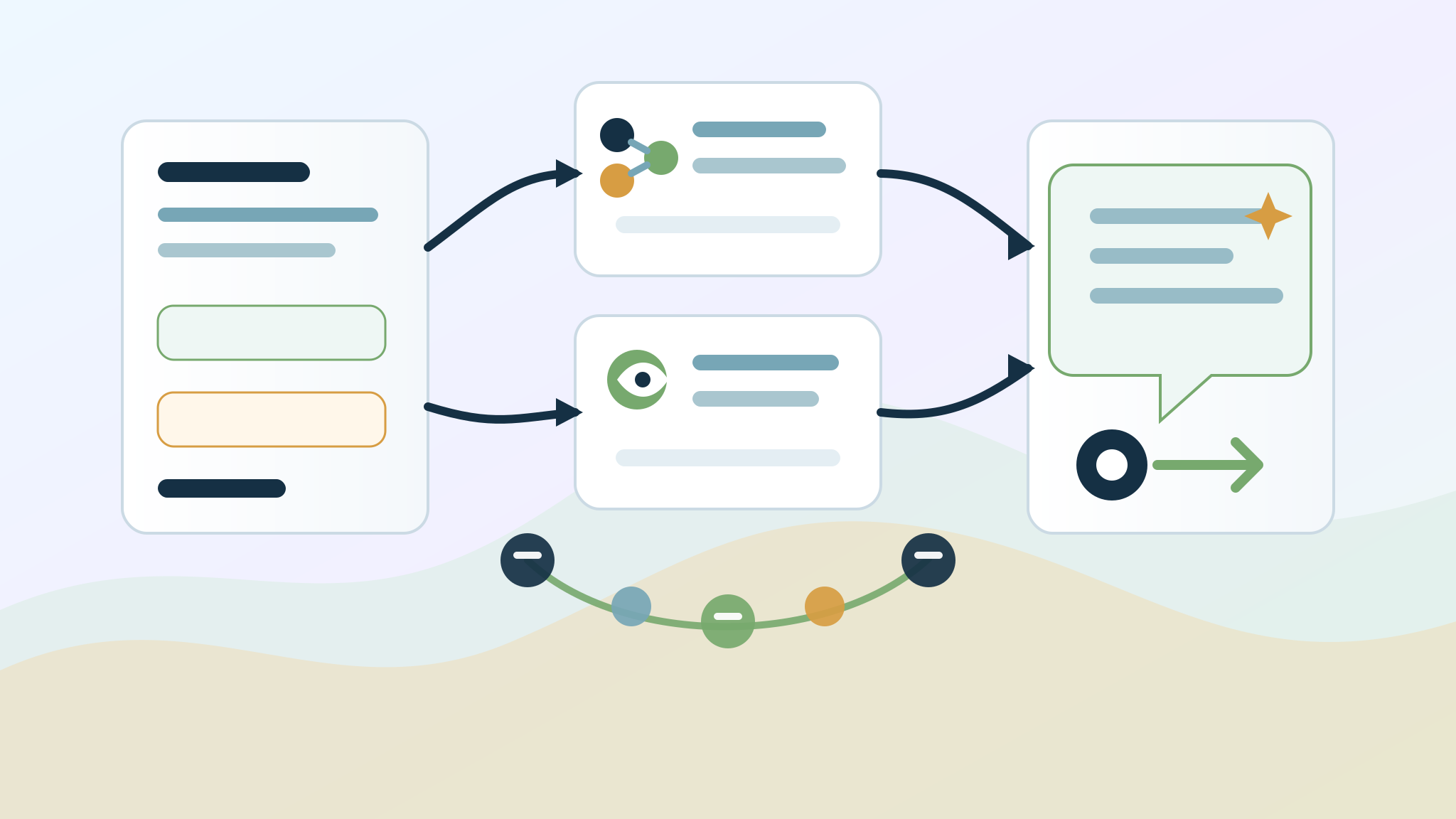
“AI SEO” is Halo's label for applying technical SEO, useful original content, accurate business information, internal routing, and measurement to search journeys that may include generative features. Google says those features use existing Search foundations and require no separate AEO or GEO discipline.
The useful version is not “AI writes blog posts.” It is a controlled system: identify questions close to a buying decision, publish original pages that answer them clearly, add structured data that matches visible content, and compare agreed search, engagement, or enquiry signals over time. It does not guarantee that a platform will crawl, index, rank, cite, or recommend the business.
Quick Answer
For many UK SMEs, a useful first AI SEO engagement combines a technical and content audit with one bounded implementation. It should identify the highest-intent route, fix what can be verified, establish a baseline, and define which search, engagement, or enquiry signal will be reviewed later. Price and timescale depend on the site, market, content volume, locations, integrations, and access required.
What AI SEO Actually Includes
Responsible AI SEO work can cover:
- Search intent mapping for commercial, local, and comparison queries.
- Technical checks for crawlability, speed, metadata, sitemap, canonicals, and indexation.
- Original, people-first content that explains who you serve, where you work, what you do, and what evidence supports the offer.
- FAQ and answer blocks written to help buyers make a decision, without promising a particular search treatment.
- Structured data for supported page types, only where it follows Google's policies and matches visible content.
- Internal links that connect service pages, case studies, pricing, and helpful guides.
- Conversion tracking so improvements are judged by leads and bookings.
AI SEO vs Traditional SEO
Traditional SEO includes technical access, relevance, quality, links, and measurement. Halo's AI SEO service also reviews whether public business facts and direct answers remain coherent in AI-assisted research journeys.
That means useful content should be:
- Direct enough to answer a question in one paragraph.
- Specific enough to mention locations, services, prices, timeframes, and proof.
- Structured clearly for buyers and eligible crawlers.
- Trustworthy enough to avoid vague claims.
What To Buy First
If your website already exists, start with an AI SEO and AEO audit. This should identify:
- Pages that should rank but do not.
- Missing service pages.
- Thin or duplicated content.
- Weak internal links.
- Schema gaps.
- Local SEO problems.
- Conversion friction on your highest-intent pages.
If your website is new or has major technical or content gaps, consider combining the audit with a bounded implementation. A report without an approved action route leaves the identified problems unchanged.
Scope And Budget Drivers
There is no defensible universal price for AI SEO. A useful proposal should show what is being checked, what will be changed, what evidence will be left behind, and which dependencies remain with the client or a third-party platform.
The main scope drivers are:
- The number and condition of important pages.
- The services, locations, audiences, and competitors that need research.
- Whether implementation is included or the deliverable is review-only.
- Technical access, platform constraints, analytics access, and migration risk.
- The amount of original evidence, imagery, and expert input available.
- Whether ongoing measurement and iteration are required after release.
Halo publishes bounded entry prices only where the deliverable can be defined in advance. Larger search programmes are scoped after the current site and evidence are understood.
Red Flags
Avoid any provider that:
- Promises guaranteed rankings without seeing your site.
- Publishes generic AI content without human review.
- Does not connect SEO work to enquiries, calls, or bookings.
- Ignores local search and Google Business Profile.
- Cannot explain what schema they will add.
- Talks about traffic but not conversion.
How Halo Approaches AI SEO
Halo AI Services builds AI SEO around commercial questions, supportable evidence, and measurable signals. The process is:
- Audit the site, search demand, and buyer journey.
- Prioritise pages closest to a relevant buyer decision.
- Improve technical SEO, metadata, content, schema, and internal links.
- Add answer-first content for search and AI-assisted research journeys.
- Compare agreed search, engagement, or enquiry signals over a defined period without treating correlation as proof of causation.
FAQ
Are AI SEO services worth it for small businesses?
It can be worth testing when the work targets a real buyer question, fixes a known technical or content gap, and leaves a measurable baseline. It is poor value when it only produces generic articles or reports with no implementation route.
How long does AI SEO take to work?
Technical changes can be released as soon as they are approved, but discovery, crawling, indexing, ranking, AI citation, buyer behaviour, and enquiries are controlled by external systems and market conditions. Agree the observation period and evidence source before the work begins; do not buy a guaranteed timetable.
Can AI SEO help local businesses?
It can help a local business make its services, locations, evidence, and next steps clearer across its website and legitimate business profiles. The work may improve eligibility and understanding, but it does not guarantee local rankings, calls, or bookings.
What is the difference between SEO and AEO?
SEO covers the technical and content foundations that make eligible pages discoverable and useful in search. AEO is an industry term for direct-answer clarity and retrieval readiness; for Google's generative Search features, the underlying work remains SEO and does not create guaranteed placement.
Next Step
If you want a practical starting point, use the free opportunity audit and ask for three evidence-ranked candidates: one technical fix, one content fix, and one conversion fix. The first recommendation should explain what can be checked now and what needs a later observation period.