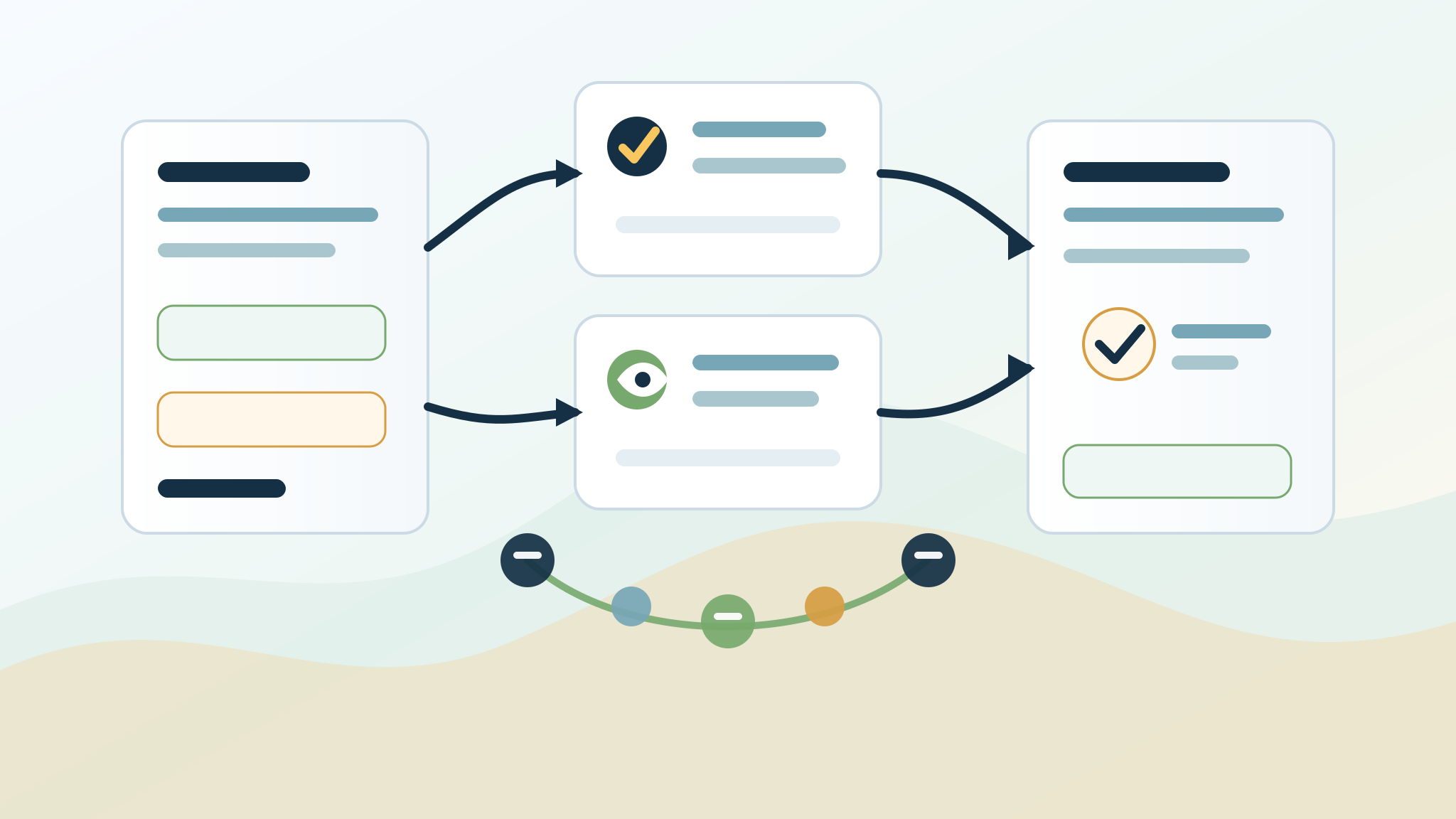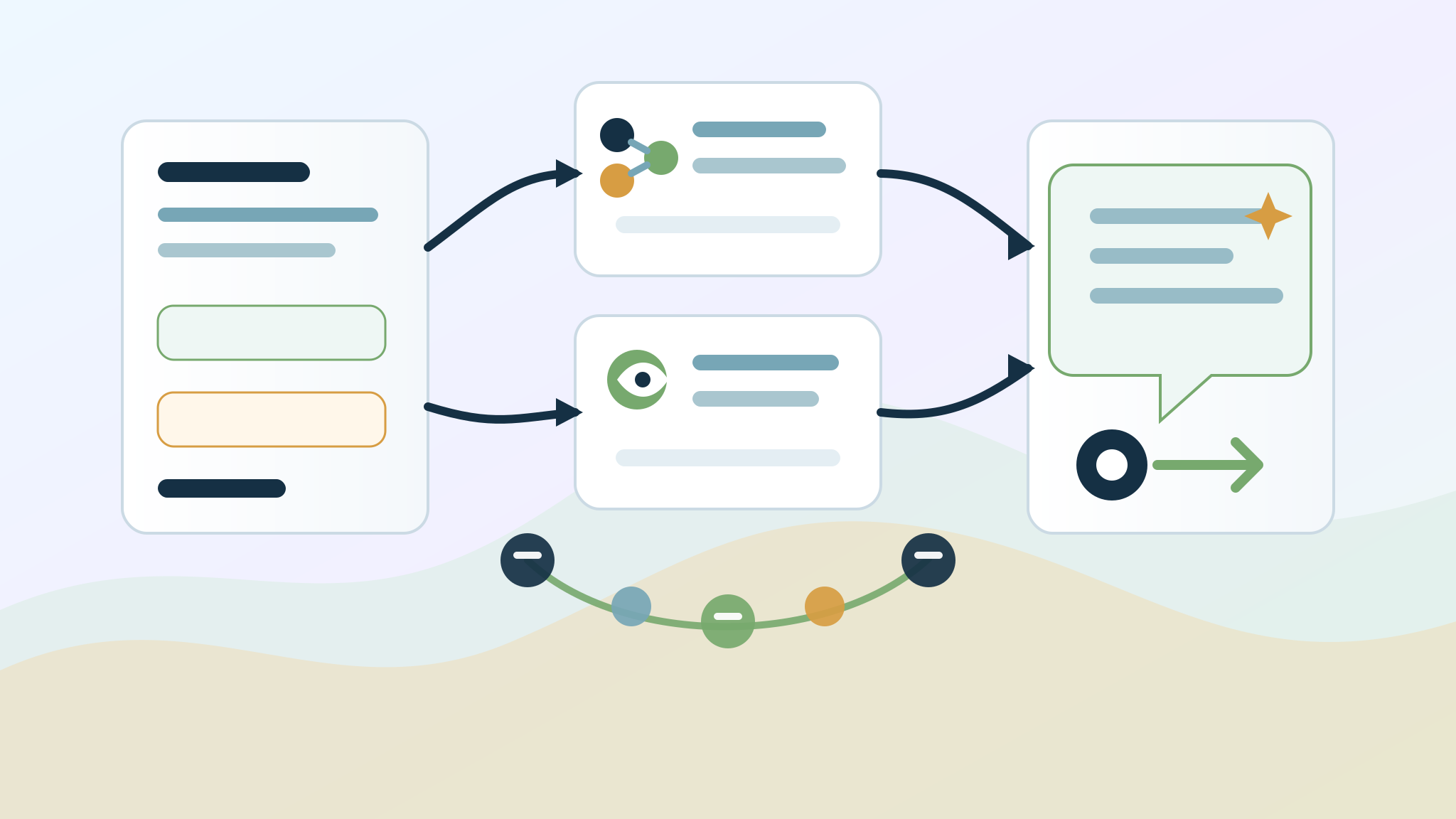
An answer engine visibility audit is Halo's public-page review of whether service information is crawlable, internally connected, specific, and supportable. It does not inspect an AI model or predict a citation.
For a UK SME, the useful audit is not a vague test of whether the brand appears in one AI answer. It is a page-by-page check of public content, consistent service facts, internal links, structured data, and the enquiry route.
Quick Answer
Review the homepage, service and guide pages, sitemap, robots.txt, and visible structured data. Record llms.txt only as an auxiliary file for systems that may use it: Google says it ignores special AI text files. The audit should identify missing facts, unclear service definitions, weak internal links, unsupported claims, and conversion gaps without treating one chatbot result as proof of visibility.
Why AI Visibility Needs An Audit
Buyers increasingly use search results, AI summaries, chat tools, comparison pages, maps, reviews, and service websites together before making contact. A business can have a decent website and still be hard for AI systems to summarise if the important facts are scattered or vague.
Common visibility problems include:
- The service is described differently on different pages.
- The homepage says what the business believes, but not what the buyer needs.
- The location or service area is unclear.
- Pricing context, process, or timescale is missing.
- FAQs answer generic questions instead of buyer questions.
- Schema exists but does not match the visible page.
- Blog posts do not link to the service or audit route.
- Proof is implied but not stated in a way a person can check.
The audit turns those issues into a practical fix list.
What To Check First
Start with the pages closest to commercial intent. For most SMEs, that means:
- Homepage.
- Main service page.
- Highest-intent location or sector page.
- Best educational blog post.
- Contact, quote, or audit route.
The first question is simple: could a buyer or eligible crawler identify the audience, offer, geography, evidence, and next action from these pages without filling gaps?
If the answer is no, publishing more content will not fix the core visibility issue.
The Five-Part Visibility Audit
A practical answer engine visibility audit should inspect five signals.
1. Entity Clarity
The site should make the business name, service category, audience, location, and offer easy to extract. AI tools struggle when the page uses clever language but avoids plain service terms.
For a service business, a clear answer might include:
- Business name.
- Service category.
- Buyer type.
- Location or service area.
- Main outcome.
- Starting price or scope boundary where appropriate.
- Next action.
2. Answer-Ready Pages
Each important page should answer one buyer question near the top. The answer should be short enough to quote and specific enough to be useful.
Examples:
- What does this service do?
- Who is it for?
- What is included?
- How does the first step work?
- What information does the business need before recommending a fix?
- What stays behind approval?
This is where answer engine optimization and AI optimization overlap: the content has to serve humans and machines at the same time.
The AI SEO services buying guide puts that page-level work in a broader commercial scope, including what an SME should buy, what should be measured and which ranking or lead promises remain unsupported.
When the audit spans visibility, capture, response and admin rather than one page, use the AI audit flow guide to choose the first bottleneck without pretending every weakness needs a rebuild.
3. Internal Link Routing
AI visibility is weaker when helpful pages sit alone. Blog posts should link to the relevant service page, audit route, scorecard, and adjacent guide. Service pages should link back to the strongest supporting articles.
For example, a post about AI search visibility should route readers toward the AEO guide, services, and free AI audit rather than ending as a dead article.
4. Schema And Technical Signals
Schema should support the visible page, not decorate it with claims the page does not make.
Useful checks include:
- Article schema for guides.
- FAQPage schema when visible question-and-answer content exists.
- BreadcrumbList schema for navigation context.
- Organization, Service, or LocalBusiness schema only where the page supports those details.
- Sitemap entries for important pages.
- Robots.txt that does not block useful public pages.
- Feed and llms.txt routes where the site uses them.
The point is not to add every schema type. Use only supported markup that follows Google's structured-data policies, matches the visible page, and does not invent facts.
5. Buyer Action Clarity
Visibility without a next action creates weak commercial value. The audit should check whether a reader can move from answer to enquiry without guessing.
Good next actions include:
- Ask for a focused audit.
- Compare service routes.
- Send one URL or workflow for review.
- Score visibility, capture, response, and admin readiness.
- Choose the first practical implementation slice.
Halo’s free AI audit is built around that idea: start with one visible surface and one useful next move.
What Not To Treat As Proof
Do not treat one AI answer as the whole audit. Treat observed answers as volatile samples, not coverage proof. Retrieval and citations can vary, while crawling, indexing, and serving remain separate and unguaranteed stages.
Weak proof signals include:
- Asking one chatbot whether it knows the business.
- Searching the brand name only.
- Counting traffic without checking enquiry quality.
- Publishing AI-written posts with no service route.
- Adding schema that repeats unsupported marketing claims.
- Assuming a competitor mention means they have a better AI strategy.
Better proof is page-level: the important facts are visible, consistent, crawlable, internally linked, structured, and connected to an enquiry path.
A Safe First Fix
The safest first fix is usually one answer-ready service or guide page.
Improve that page by adding:
- A direct answer near the top.
- Clear service, buyer, location, and outcome language.
- A short FAQ section.
- Matching Article, FAQPage, or BreadcrumbList schema where relevant.
- Links to the audit, service, and related guide routes.
- A cleaner CTA that explains what happens next.
That gives the business a measured first slice before committing to a larger content or automation programme.
FAQ
What is an answer engine visibility audit?
An answer engine visibility audit is Halo's review of whether important public pages are accessible, clear, supportable, internally linked, and connected to a buyer route. It does not inspect an AI model or guarantee that a system will retrieve, summarise, or cite the pages.
Is this the same as an SEO audit?
It overlaps with SEO but uses a narrower content-and-evidence lens. The review checks technical access, direct buyer answers, service facts, internal links, structured data, and conversion paths. Structured data must match the visible page, but it does not guarantee visibility.
Can a small business test AI visibility without giving account access?
Yes. The first review can use public pages, a sitemap, visible schema, robots.txt, search snippets, and redacted workflow notes. Private analytics, inboxes, CRMs, API keys, or customer records should not be needed for the first recommendation.
What should a UK SME fix first?
Fix the page closest to revenue first. That is usually the homepage, a main service page, a high-intent local page, or a guide that already explains a buyer problem. Make it clearer before publishing more low-intent content.
Next Step
If the site is unclear to buyers, it will usually be unclear to AI systems too. Start with one page, one buyer question, and one proof signal.
Halo can review the public surface through the free AI audit, compare it against the AI readiness scorecard, and recommend the first practical visibility, capture, response, or admin fix before a bigger build is discussed.