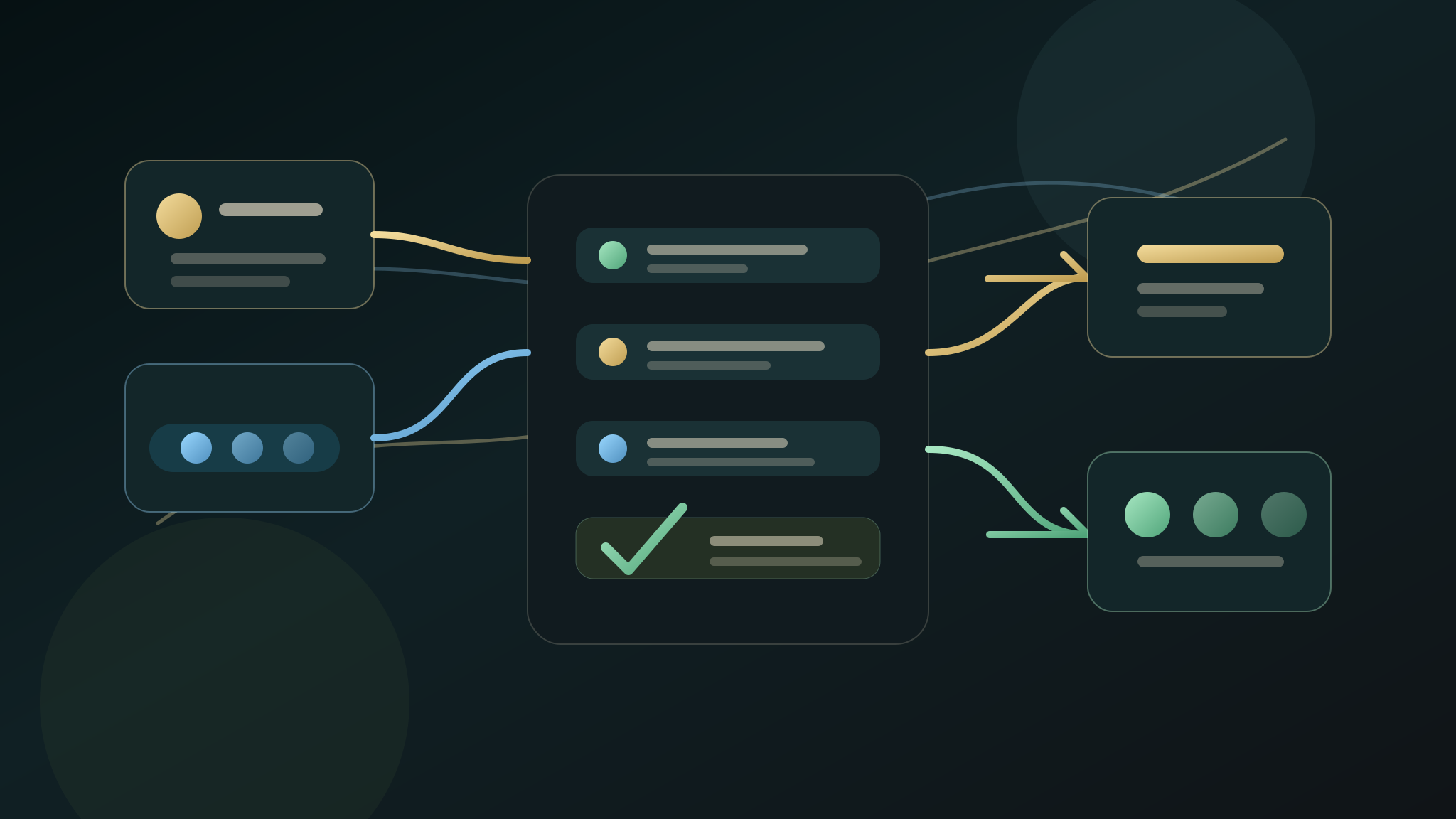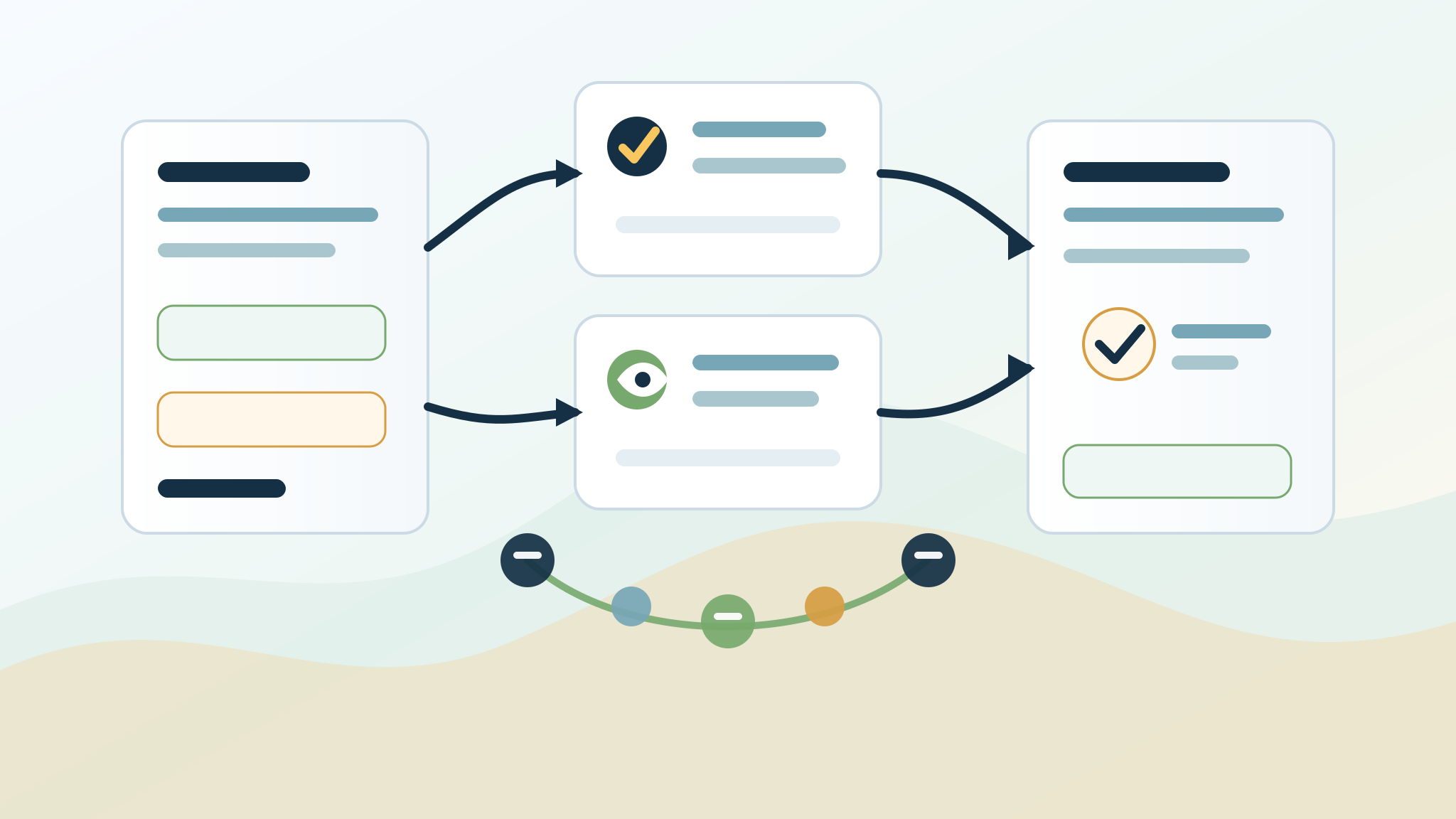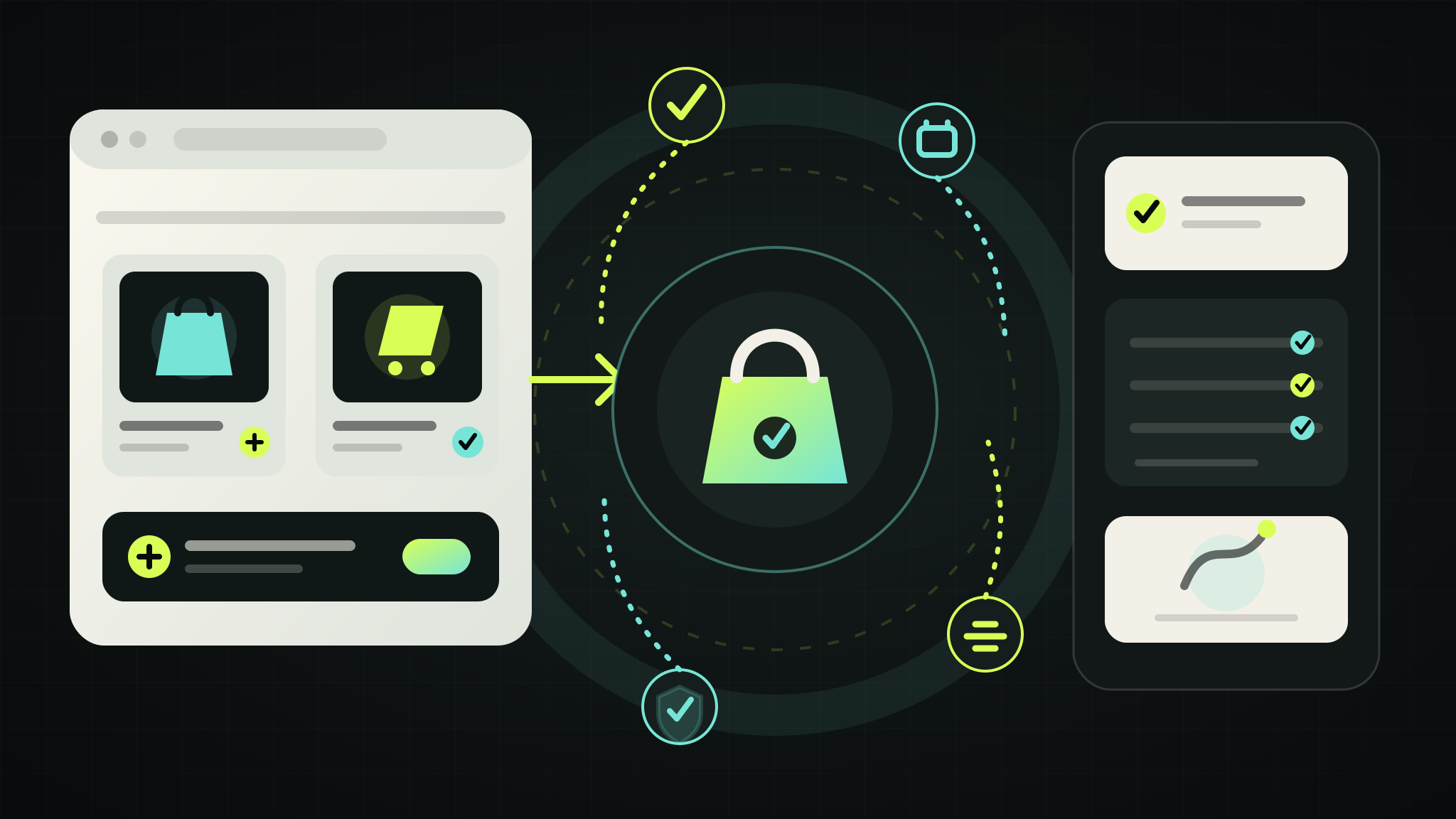
An e-commerce launch checklist for a UK business should follow one product from discovery to fulfilment and recovery. A polished homepage cannot compensate for incorrect variants, unavailable payments, unclear delivery, missing notifications or an order that never reaches the operator.
Treat launch as a chain of evidence. Check the exact product, market, device, payment mode and fulfilment route you intend to release, then state what remains untested. One successful test order is valuable, but it proves only that tested path at that time.
Quick Answer
Before launch, verify product facts and ownership, stock and variant rules, price and tax display, delivery options, checkout, payment status, order notifications, fulfilment handoff, cancellation or refund route, analytics consent and recovery behaviour. Use test orders for representative scenarios, reconcile the storefront, provider and operational records, then keep the receipts. Platform activation and account approval remain controlled by the relevant provider.
Halo’s commerce service can help build or repair the customer and operator route. Storefront work may also involve website development, workflow automation and search visibility, but each needs its own acceptance evidence.
Decision Framework: What Launch Stage Are You At?
Choose checks that match the real stage:
- Catalogue-ready. Product data, imagery, variants and ownership are controlled, but checkout is not yet activated.
- Transaction-ready. A permitted payment mode, delivery calculation and order creation route can be tested.
- Operations-ready. Paid orders reach the right people and systems with a defined pick, make, book or dispatch action.
- Public-launch-ready. Customer-facing policies, monitoring, support, recovery and approved account settings are in place for the intended market.
Do not label a store public-launch-ready because the theme looks finished. If provider verification, payment activation, shipping accounts or policy review are pending, record them as release gates.
Product And Catalogue Checks
For each launch product, verify:
- Title, description, images and rights to use them.
- SKU or stable identifier, variants and valid combinations.
- Price display, currency, stock rule and availability wording.
- Dimensions, weight and other data used for delivery.
- What is included, excluded, made to order or personalised.
- Page status, canonical route and internal discovery links.
- The owner who approved the source facts and checked date.
Duplicate or incomplete records can spread errors into search, feeds, checkout and fulfilment. The AI data-hygiene guide gives a controlled way to clean inputs before connecting automation.
Checkout And Payment Checks
Test more than the happy path. Use an approved platform test mode or documented test method to check a valid order, declined or failed payment behaviour, required fields, address errors, delivery selection, discount rules if used, confirmation and return from any external payment page.
Confirm what the customer sees and what the operator receives. The amounts, currency, items, tax treatment, delivery choice and payment state should reconcile across the order page, provider record and notification. Do not place a real charge merely to make a test look stronger when a safe test route exists.
Platforms control account approval, payment activation, feature availability and production access. A developer can configure and test an available route; they cannot guarantee that a provider will activate or retain an account.
Fulfilment And Recovery Checks
Follow the order after payment:
- Does the correct owner receive a usable alert?
- Can staff see the item, variant, quantity and customer instruction?
- Is the order held when payment is pending or failed?
- Are stock or capacity changes applied at the intended point?
- Can the team record packing, booking, collection or dispatch?
- What happens when an item is unavailable or an address is wrong?
- Can support locate the same order without relying on an email alone?
If automation creates tasks or synchronises stock, test duplicate events, delayed events and manual recovery. Never assume a webhook will arrive exactly once.
Policies, Tax And Consumer Information
The UK government’s online and distance selling guidance describes information businesses may need to provide and rules that can apply to distance sales. Shopify also publishes a broad general setup checklist covering setup areas that merchants should consider on that platform.
Use those sources as prompts, not a substitute for advice tailored to the products, customers and jurisdictions involved. Tax treatment, cancellation rights, returns, age restrictions, regulated goods and consumer-policy wording need owner approval and, where appropriate, professional review. Halo should not invent those decisions.
What A Test Order Proves
Keep a receipt with the build or theme identifier, product, market, device, checkout mode, order identifier, payment state, fulfilment state and checked time. Redact personal or payment data from shared evidence.
One test order proves only the exact route recorded. It does not prove every product, browser, payment method, address, tax case, shipping region, provider state or fulfilment outcome. It also does not prove sales, conversion rate or operational capacity. Halo currently presents no published commerce client case study, so this checklist is a method—not an outcome story. The proof standard and proof-ledger guide explain that distinction.
What To Send Halo
Send enough to map the route without exposing accounts or customer data:
- The store or preview URL and intended launch market.
- One representative product and its hardest variant.
- Current platform, payment and fulfilment providers.
- Delivery regions and the owner of shipping rules.
- The operational handoff after an order is placed.
- Known provider or account gates.
- Policy, tax and consumer questions awaiting professional review.
- The scenarios and evidence needed for launch acceptance.
Use the e-commerce journey audit for an existing store, or send an e-commerce operations brief for a new build.
Next Step
Choose one representative product and draw five states: discover, configure, pay, fulfil and recover. Name the owner and expected record at each state. Halo can then identify the smallest useful build or repair, the account gates the owner must complete and the exact acceptance checks—without promising revenue or treating a single order as universal proof.
FAQ
How many test orders should an online store run before launch?
There is no universal number. Select scenarios by risk: representative products and variants, intended markets, payment states, delivery methods, discounts and recovery paths. Record coverage so the team knows what was and was not tested.
Does a successful test order mean the store is ready?
No. It proves the recorded transaction path worked in that test context. Public readiness also depends on account activation, policies, product accuracy, fulfilment, support, security, privacy, monitoring and untested scenarios.
Who should approve tax and consumer-policy wording?
The business owner is responsible for obtaining advice appropriate to its products, customers and markets. Platform templates and this checklist can identify questions, but they are not professional legal or tax advice.
Can an e-commerce developer guarantee sales or conversion?
No. A developer can build and test the agreed journey. Sales and conversion depend on demand, traffic, offer, price, trust, merchandising and operations, and any performance claim needs defined analytics and attribution evidence.
What should I send for an e-commerce audit?
Send a public or preview route, one representative product, intended market, platform, payment and fulfilment outline, known account gates and the acceptance scenarios. Do not send passwords, full customer exports or payment credentials.